Bad torque converter symptoms: 6 signs, what causes them, and what to do next

Quick answer: the most common signs of a bad torque converter are a shudder that feels like rumble strips at light throttle (often around 30 to 50 mph), the transmission overheating, a whirring noise that rises with engine speed, the car not shifting into top gear on the freeway, stalling when coming to a stop, and a check engine light with codes like P0740 or P0741. At our Phoenix shop, overheating is the sign customers come in with most.
Written by Mark Dannunzio, co-owner and ASE-certified lead technician at Shift Masters Transmissions in Phoenix. Mark and Ken and their team have rebuilt thousands of transmissions, automatic, manual, CVT and diesel.
(Googles “torque converter.” Nods like I understood the first result. I did not.) If your car is shuddering or running hot and someone just said “sounds like your torque converter,” you’re in the right place, and you’re already ahead of where I was.
Regulars know Gary, your transmission. Meet Tony, the torque converter: Gary’s sidekick, who sits between the engine and Gary and does a lot of quiet heavy lifting. (Tony does not get enough credit. Tony would like that on the record.)
What a torque converter does
In an automatic, the torque converter does the job a clutch does in a manual car. It uses transmission fluid to pass the engine’s power to the transmission, which is why your car can sit still in Drive without stalling. (Tony is basically a very fancy fan blowing on another fan. I’m only slightly oversimplifying.)
Most modern converters also have a lockup clutch that clamps the engine and transmission together at cruising speed, so nothing slips and you save fuel. That lockup clutch is where a lot of the trouble starts. (Tony’s one job at highway speed is a firm handshake. Some days it’s a limp one.)
The 6 signs of a bad torque converter
The usual signs, what each one feels like from the driver’s seat, and where each comes from.
Any one of these can also come from somewhere else, so treat the list as a reason to get it checked, not a diagnosis. (I diagnosed my own car from a table once. I was wrong in a very expensive way.)
Torque converter shudder: the rumble strip feeling
This is the classic one. RepairPal says “A faulty torque converter can cause a shudder just before or after it locks up at cruising speed,” usually “about 30 to 45 MPH.” Gearstar describes it as “Like driving over rumble strips for a second or two, at part throttle, usually between 40 and 50 mph, on flat ground.” (So if your car feels like it’s driving over rumble strips on a perfectly smooth road, that’s Tony fumbling the handshake.)
Here’s the good news most articles skip: sometimes the fix is fluid, not a new converter. GM’s service bulletin 18-NA-355 covers a shudder “as if they are driving over rumble strips” on some 2015 to 2019 trucks, SUVs and cars with 8-speed automatics, including the Silverado, Sierra, Colorado, Yukon, Escalade, Camaro and Corvette. (GM saw the rumble strips too. Tony is famous.)
That bulletin covers specific GM models, so it isn’t a fix for every car. (Pouring fresh fluid into a worn-out converter is like giving Tony a pep talk. Nice, but his bones are still broken.) Old fluid is still worth ruling out, and our guide to how often to change transmission fluid covers the Phoenix intervals.
Overheating: the sign we see most
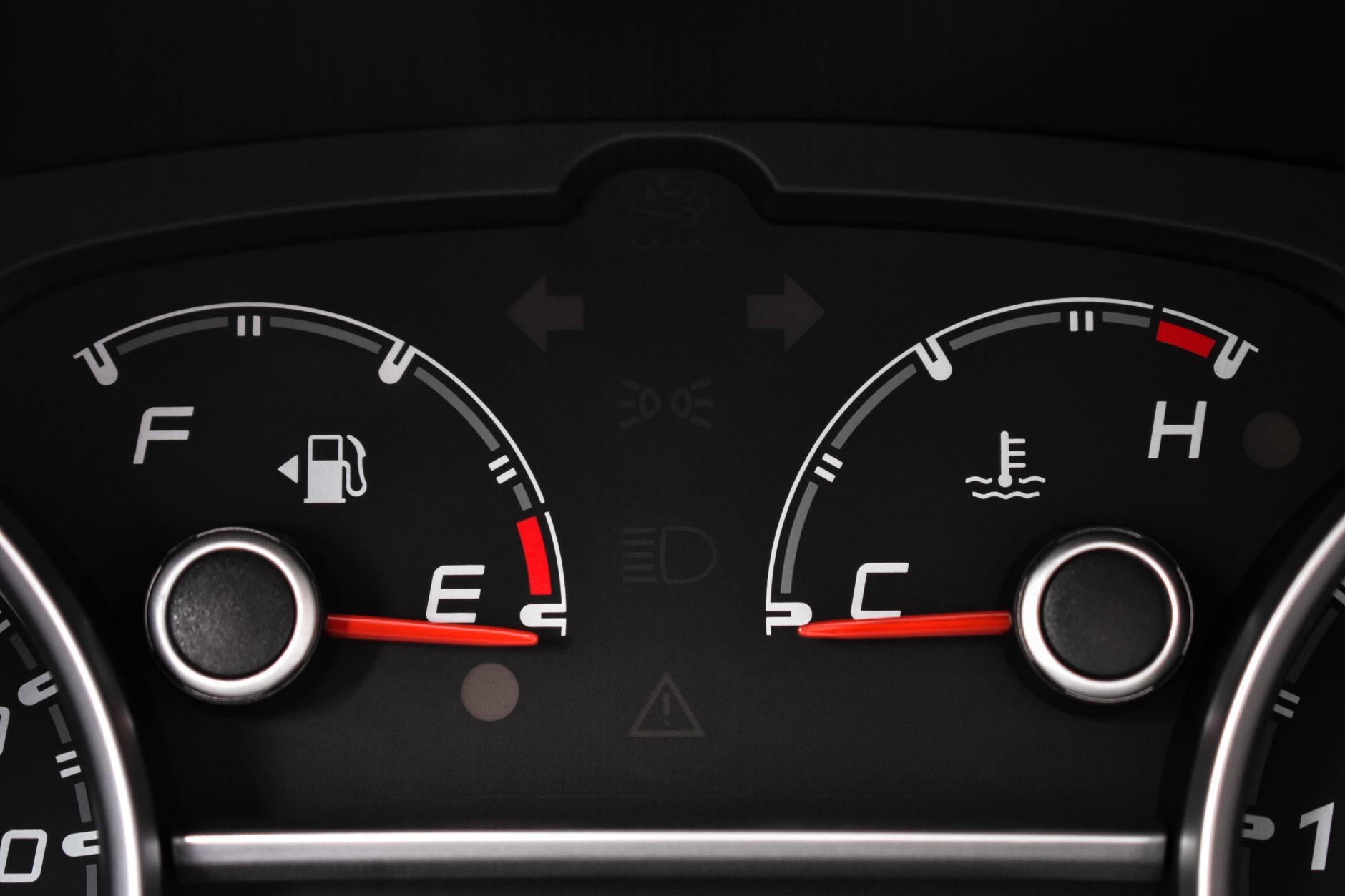
Overheating is the torque converter sign customers bring to Mark and Ken and their team most often. (Phoenix: where even the car parts need sunscreen.) Gearstar explains the link: “A converter that is slipping instead of coupling turns fuel into heat.”
And heat feeds on itself. Gearstar again: “Sustained high temps cook the fluid, and cooked fluid finishes off whatever is left.” (Tony gets hot, the fluid gets cooked, Tony gets hotter. It’s a very sad little loop.) CarParts.com also lists cooling problems as a cause: “A faulty cooling system can lead to overheating, which can damage the torque converter’s components.”
The codes: P0740 to P0742
A torque converter problem often turns on the check engine light. (Tony doesn’t text. Tony sends a code.) These are the ones to know, with RepairPal’s definitions:
Notice that a solenoid or dirty fluid can set these codes too, not just a worn converter. (Plot twist: Tony might be innocent.) That’s why a code is a starting point, as our check engine light guide explains.
Is it the torque converter or the transmission?
Gearstar gives the simplest rule of thumb: “The converter is the suspect when the problem is tied to a speed or a load rather than to a specific gear.” (Tony has bad days at certain speeds. Gary has bad days in certain gears.)
So a shudder every time you cruise at 40 points at Tony, while a clunk going into one particular gear points at Gary. (They will both blame each other. Don’t listen.) If yours is slipping in every gear, our guides to transmission slipping and transmission problems cover the other suspects.
How it gets fixed, and what it costs
There’s no reaching Tony from the outside. CarParts.com says “The transmission must be removed to access and replace the torque converter.” (Tony lives behind Gary. To visit Tony, you have to move Gary. Gary hates this.)
That last point is the big one. (Tony falling apart is bad. Tony throwing his pieces at Gary is worse.) If it spreads, you’re pricing a transmission rebuild instead, and our rebuild cost guide has those numbers.
What we see in the shop
The torque converter sign that brings people to us most is overheating. (Phoenix, again. Phoenix is always a suspect.) How we fix it depends on the damage: if it’s caught early, replacing the converter can be enough, and if debris has already got into the transmission, it needs a rebuild.
So the cheapest version of this repair is the early one. (Tony appreciates a prompt visit. So does your wallet.) We check it for free, and if it does need a rebuild, ours come with a 3 years or 36,000 miles warranty on parts and labor.
Torque converter questions
What are the symptoms of a bad torque converter?
The common signs are a shudder at light throttle around 30 to 50 mph, the transmission overheating, a whirring noise that rises with engine speed, the car not shifting into top gear on the freeway, stalling when coming to a stop, and a check engine light with codes such as P0740 or P0741.
Can you drive with a bad torque converter?
Keep it to a minimum and get it checked soon. CarParts.com warns that debris from a faulty converter can circulate through the transmission, which can turn a converter job into a bigger repair.
Can you replace a torque converter without removing the transmission?
No. CarParts.com says the transmission must be removed to reach and replace the torque converter, which is why labor is most of the cost.
How much does it cost to replace a torque converter?
ThePricer puts a typical torque converter replacement at about $700 to $1,800 for parts and labor, with the converter itself roughly $150 to $500. These are national figures, not our prices.
Can new transmission fluid fix torque converter shudder?
Sometimes. GM's bulletin 18-NA-355 says certain 2015-2019 vehicles with 8-speed automatics that have torque converter clutch shudder should get a fluid exchange, and that it may take up to 200 miles for the shudder to go away. It does not fix a converter that is worn out.