Transmission Shop Phoenix AZ: Complete Guide to Transmission Repair, Service & Auto Care
When you need a transmission shop in Phoenix, AZ, choosing the right repair facility can make a major difference in the performance, reliability, and long-term cost of your vehicle. Transmission problems can begin with something as simple as a fluid leak or delayed shifting. However, they can also develop into serious mechanical failures when warning signs are ignored.
At Shift Masters Transmissions, our focus is transmission repair, transmission service, diagnostics, rebuilding, and replacement for drivers throughout the Phoenix area. Because transmission problems can vary significantly from one vehicle to another, accurate diagnosis is an important first step before deciding whether a repair, rebuild, or replacement is appropriate.
Moreover, Phoenix-area driving conditions can place additional demands on a vehicle’s drivetrain. Extreme summer temperatures, stop-and-go traffic, long commutes, towing, and heavy vehicle use can all contribute to increased transmission stress.
Therefore, understanding how your transmission works, recognizing warning signs, and maintaining it properly can help you avoid unnecessary repairs and unexpected breakdowns.
What Does a Transmission Shop Do?
A professional transmission shop specializes in diagnosing, servicing, repairing, rebuilding, and replacing vehicle transmissions and related drivetrain components.
While some general repair shops perform basic transmission services, a transmission specialist focuses extensively on the systems responsible for transferring power from the engine to the wheels.
For example, transmission-related services can include:
- Transmission diagnostics
- Transmission fluid service
- Transmission filter replacement
- Transmission leak diagnosis
- Automatic transmission repair
- Manual transmission repair
- CVT transmission service and repair
- Transmission rebuilding
- Transmission replacement
- Transfer case service
- Drivetrain diagnostics
- Related transmission component repair
In addition, a professional transmission technician can investigate symptoms before recommending a major repair.
That distinction matters because a transmission that is slipping does not automatically mean that the entire transmission needs to be replaced.
Instead, proper diagnostics can help identify the actual source of the problem.
Transmission Repair in Phoenix, AZ
Transmission repair can involve anything from correcting a fluid leak to repairing internal transmission components.
Because transmissions contain numerous moving parts, the correct repair depends on the vehicle, transmission type, symptoms, maintenance history, mileage, and diagnostic findings.
For instance, a vehicle experiencing a minor fluid leak may need a seal or gasket repair. On the other hand, a transmission with significant internal wear may require rebuilding or replacement.
Consequently, drivers should avoid making repair decisions based solely on one symptom.
A transmission specialist can evaluate the vehicle and determine what is actually happening before recommending the next step.
Transmission Diagnostics: The First Step
Accurate diagnostics are one of the most important parts of transmission repair.
Modern vehicles use electronic control systems, sensors, solenoids, computers, and mechanical components that work together to control transmission operation. As a result, a problem may not always originate inside the transmission itself.
For example, shifting problems can sometimes be related to:
- Electronic control problems
- Faulty sensors
- Solenoid issues
- Low or contaminated transmission fluid
- Wiring problems
- Mechanical wear
- Transmission pressure problems
- Internal component failure
Therefore, diagnostic testing can help narrow down the source of the problem.
A proper diagnostic process should consider both electronic information and the vehicle’s physical symptoms. Furthermore, technicians can use the combination of diagnostic information, inspection, testing, and experience to determine the most appropriate repair path.
Signs You May Need Transmission Repair
Transmission problems often provide warning signs before complete failure occurs.
However, drivers sometimes ignore these symptoms because the vehicle continues to operate.
That can be a costly mistake.
Common transmission warning signs include:
Transmission Slipping
Transmission slipping can occur when the transmission unexpectedly changes gears, struggles to remain in gear, or allows engine RPM to rise without a corresponding increase in vehicle speed.
If this happens repeatedly, the vehicle should be inspected.
Hard or Rough Shifting
A transmission that shifts harshly, bangs into gear, or produces unusually rough gear changes may have a mechanical, hydraulic, or electronic problem.
Additionally, rough shifting can become worse over time if the underlying issue is not addressed.
Delayed Engagement
Delayed engagement occurs when the vehicle takes longer than normal to move after selecting Drive or Reverse.
For example, you may shift into Drive and experience a noticeable delay before the vehicle begins moving.
Although the delay may initially seem minor, it can indicate a developing transmission problem.
Transmission Fluid Leaks
Transmission fluid should not normally be leaking onto your driveway or parking space.
Therefore, reddish, brown, or otherwise unusual fluid underneath the vehicle deserves attention.
A small leak can eventually become a major problem because insufficient fluid can affect lubrication, hydraulic pressure, cooling, and transmission operation.
Grinding, Whining, or Clunking
Unusual noises can also indicate drivetrain or transmission problems.
Grinding, whining, humming, clunking, or other new noises should not automatically be dismissed as normal vehicle sounds.
Instead, the vehicle should be evaluated to determine where the noise is coming from.
Burning Smell
A burning odor can indicate overheating, contaminated fluid, clutch material, or another mechanical problem.
Because continued operation can potentially make the problem worse, a burning smell should be taken seriously.
Transmission Service vs. Transmission Repair
Transmission service and transmission repair are not necessarily the same thing.
Routine service generally focuses on maintaining the transmission and fluid system according to the vehicle manufacturer’s requirements and the vehicle’s operating conditions.
Transmission repair, however, addresses an existing problem.
For example, routine maintenance might involve transmission fluid and filter service when appropriate. In contrast, a repair may involve replacing a failed component, repairing a leak, or addressing an internal mechanical problem.
Therefore, regular maintenance can be an important part of preventing avoidable transmission problems, although maintenance cannot prevent every transmission failure.
Why Phoenix Heat Matters to Your Transmission
Phoenix presents unique environmental conditions for vehicles.
During Arizona summers, extreme temperatures can place additional stress on cooling systems, engines, transmissions, batteries, tires, and other vehicle components.
Transmission fluid helps lubricate and cool transmission components. Consequently, excessive heat can contribute to fluid degradation and increased operating temperatures.
Furthermore, Phoenix traffic can compound the problem.
Stop-and-go driving, frequent acceleration, extended idling, heavy loads, and long commutes can all increase drivetrain workload.
For that reason, Phoenix drivers should pay attention to transmission maintenance and warning signs, particularly when vehicles are used heavily or operate in demanding conditions.
Automatic Transmission Repair
Automatic transmissions are designed to change gears without requiring the driver to manually operate a clutch and gear selector.
However, modern automatic transmissions are complex systems.
They may contain numerous gears, clutches, bands, valves, solenoids, sensors, control modules, and other components.
Therefore, automatic transmission problems can have many possible causes.
Common automatic transmission symptoms include:
- Slipping
- Harsh shifting
- Delayed engagement
- Failure to shift
- Getting stuck in one gear
- Transmission fluid leaks
- Overheating
- Unusual noises
- Warning lights
Because these symptoms can have different causes, proper diagnosis is essential.
Manual Transmission Repair
Manual transmissions have different operating characteristics from automatic transmissions.
They rely on driver-controlled gear changes and a clutch system.
As a result, manual transmission problems can involve components such as:
- Clutches
- Synchronizers
- Gears
- Bearings
- Shafts
- Seals
- Linkage components
Grinding during gear changes, difficulty selecting gears, clutch problems, and unusual noises can indicate that the vehicle needs inspection.
However, not every shifting problem necessarily means the transmission itself has failed.
A proper diagnosis can help determine whether the issue involves the clutch, transmission, linkage, hydraulics, or another component.
CVT Transmission Service and Repair
Continuously variable transmissions, commonly called CVTs, operate differently from traditional automatic transmissions.
Instead of using conventional fixed gear ratios in the same manner as a traditional automatic transmission, a CVT continuously varies its ratio within its operating range.
Consequently, CVT service and repair require an understanding of the specific transmission design and vehicle manufacturer’s requirements.
Symptoms such as unusual acceleration behavior, shuddering, overheating, warning lights, or abnormal noises should be investigated rather than ignored.
Transmission Rebuild vs. Transmission Replacement
One of the biggest questions vehicle owners face is whether to rebuild a transmission or replace it.
There is no universal answer.
The right choice depends on the vehicle, transmission condition, parts availability, mileage, overall vehicle condition, repair requirements, and cost.
What Is a Transmission Rebuild?
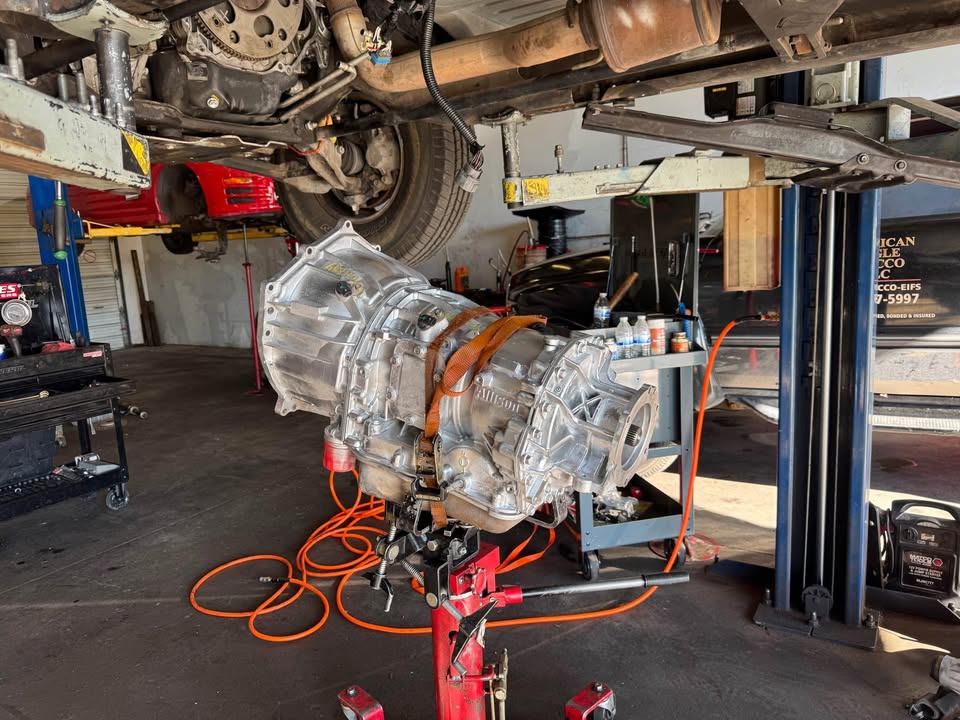
A transmission rebuild involves disassembling the transmission, inspecting its components, replacing worn or damaged parts as appropriate, and reassembling the unit.
The exact process depends on the transmission and the problems discovered during inspection.
A rebuild can be an appropriate solution when the transmission has internal problems but the vehicle and transmission case are otherwise suitable for rebuilding.
What Is Transmission Replacement?
Transmission replacement involves removing the existing transmission and installing another unit.
Depending on the situation, the replacement may involve a remanufactured, rebuilt, or other appropriate transmission assembly.
Therefore, the decision between rebuilding and replacing should be based on the specific vehicle and diagnostic findings rather than a one-size-fits-all rule.
Transmission Fluid Is Important
Transmission fluid performs several important functions.
It can help lubricate internal components, transfer hydraulic pressure, and assist with heat management.
Over time, however, transmission fluid can become contaminated or degraded.
Furthermore, the correct fluid type matters.
Different transmissions require different fluids and specifications. Using the wrong fluid can create additional problems.
Therefore, transmission fluid service should follow the requirements for the specific vehicle and transmission.
If you notice a fluid leak, unusual shifting, overheating, or changes in transmission performance, professional inspection is recommended.
High-Mileage Vehicles and Transmission Problems
Older and high-mileage vehicles can experience increased wear throughout the drivetrain.
However, high mileage does not automatically mean a transmission needs to be replaced.
In fact, a properly maintained high-mileage vehicle may continue operating reliably for many years.
Nevertheless, maintenance history becomes increasingly important as mileage increases.
For example, fluid condition, previous repairs, driving habits, towing use, and vehicle operating conditions can all provide valuable information when diagnosing a transmission concern.
Transmission Problems Can Start Small
One of the biggest mistakes vehicle owners can make is waiting until a transmission problem becomes severe.
A small leak may become a fluid-loss problem.
A minor shifting issue may become a larger drivability concern.
A warning light may be the first indication of a developing electronic or mechanical problem.
Therefore, early diagnosis can give vehicle owners more information about what is happening before the vehicle reaches a complete failure condition.
This does not mean every transmission symptom requires an immediate transmission rebuild.
Instead, it means that identifying the problem early gives you a better opportunity to make an informed repair decision.
Complete Automotive Care in Phoenix
Although Shift Masters specializes in transmissions, transmission problems can sometimes overlap with other vehicle systems.
For example, drivetrain symptoms may involve components outside the transmission.
Depending on the vehicle and symptoms, inspection may involve related systems such as:
- Transfer cases
- Differentials
- Driveshafts
- Axles
- CV joints
- Clutches
- Cooling systems
- Electronic control systems
Therefore, understanding the entire drivetrain can be important when diagnosing vehicle performance problems.
For Phoenix drivers, this broader approach can help distinguish a transmission problem from another mechanical issue producing similar symptoms.
Transmission Repair for Phoenix Drivers
Phoenix drivers deal with conditions that can be hard on vehicles.
Extreme summer temperatures are one factor. However, daily driving patterns also matter.
Long commutes, heavy traffic, frequent stops, freeway driving, towing, and high-mileage use can all contribute to vehicle wear.
Additionally, many Phoenix-area drivers rely on their vehicles every day.
As a result, unexpected transmission failure can create significant disruption.
That is why paying attention to warning signs and maintaining your vehicle according to its needs is important.
If the vehicle begins shifting differently, leaking fluid, overheating, or producing unusual noises, having it evaluated can help determine what is happening.
Choosing a Transmission Shop in Phoenix
When choosing a transmission shop, consider more than price alone.
First, look for a business with experience diagnosing transmission problems.
Next, look for clear communication about the problem and potential repair options.
Additionally, consider whether the shop explains the difference between repair, rebuilding, and replacement rather than automatically recommending the most expensive option.
You should also look for a business with a verifiable local presence, consistent customer reviews, established service information, and a website that clearly explains what it does.
Furthermore, look for evidence of actual automotive expertise.
Useful educational information, real customer experiences, service information, and consistent business details can all help establish confidence before you authorize a major repair.
Why Accurate Diagnostics Matter Before a Major Repair
A transmission is one of the more expensive components in many vehicles.
Therefore, replacing or rebuilding one should not be based solely on guesswork.
A proper diagnostic process can help determine whether the transmission itself is failing or whether another component is causing the symptoms.
For example, an electrical issue can sometimes produce symptoms that resemble a mechanical transmission problem.
Likewise, low fluid, a leak, a sensor problem, or another drivetrain issue can affect vehicle performance.
Consequently, diagnosis should come before major repair whenever practical.
How to Protect Your Transmission
Although no maintenance program can guarantee that a transmission will never fail, several habits can help support long-term vehicle reliability.
Follow the Correct Maintenance Schedule
Follow the vehicle manufacturer’s recommendations for transmission service and fluid requirements.
However, driving conditions can also matter.
Vehicles used for towing, heavy traffic, severe temperatures, or other demanding applications may require different maintenance considerations.
Pay Attention to Warning Signs
Do not ignore changes in shifting behavior.
Similarly, do not ignore leaks, warning lights, burning smells, or unusual noises.
Small changes can provide useful clues about developing problems.
Check for Leaks
If you regularly notice fluid underneath your vehicle, have the source investigated.
A leak should not simply be ignored because the vehicle still drives normally.
Avoid Unnecessary Strain
Heavy loads, towing, aggressive acceleration, and other demanding driving conditions can increase drivetrain workload.
Therefore, use the vehicle according to its intended capabilities and follow appropriate towing and maintenance recommendations.
When Should You Visit a Transmission Shop?
You should consider having your vehicle inspected when you notice a persistent change in transmission performance.
Examples include:
- Transmission slipping
- Hard shifting
- Delayed engagement
- Difficulty shifting
- Transmission fluid leaks
- Burning odors
- Unusual transmission noises
- Transmission warning lights
- Overheating
- Loss of forward or reverse movement
However, you do not necessarily need to wait until the vehicle stops moving.
If something feels different, early evaluation can provide valuable information.
Serving Phoenix and the Surrounding Area
Shift Masters Transmissions is focused on helping drivers in Phoenix and surrounding communities with transmission-related problems and automotive needs.
Our approach is centered on diagnosis, service, repair, rebuilding, and replacement based on the specific vehicle and problem.
Because every transmission problem is different, the goal should be to identify the actual cause before deciding what repair is appropriate.
Whether your vehicle is experiencing slipping, hard shifting, a fluid leak, delayed engagement, unusual noises, or another transmission concern, professional evaluation can help you understand your options.
Frequently Asked Questions About Transmission Repair in Phoenix
How do I know if my transmission is failing?
Common warning signs include slipping, hard shifting, delayed engagement, fluid leaks, unusual noises, burning smells, overheating, and warning lights. However, these symptoms can have different causes, so diagnosis is important.
How much does transmission repair cost in Phoenix?
Transmission repair costs vary significantly depending on the vehicle, transmission, parts required, labor, and extent of the problem. A minor leak repair can be very different from a complete rebuild or replacement.
Is it better to rebuild or replace a transmission?
It depends on the vehicle and the condition of the transmission. A professional inspection can help determine whether rebuilding or replacement makes more sense for the specific situation.
How often should transmission fluid be changed?
There is no single interval that applies to every vehicle. Transmission design, manufacturer specifications, driving conditions, fluid type, and vehicle use all matter. Always use the correct service requirements for your specific vehicle.
Can Phoenix heat damage a transmission?
Extreme heat can increase operating temperatures and place additional stress on vehicle systems. Proper maintenance and attention to transmission warning signs are especially important in demanding climates such as Phoenix.
Can I drive with a transmission leak?
Driving with a transmission leak can allow fluid levels to become too low and potentially cause additional damage. If you notice a leak, have the vehicle inspected rather than assuming it is safe to continue driving indefinitely.
What causes a transmission to slip?
Transmission slipping can have multiple causes, including fluid problems, worn internal components, hydraulic issues, electronic problems, or other mechanical concerns. Proper diagnosis is necessary to determine the actual cause.
Is a transmission flush always necessary?
Not necessarily. Transmission service should be based on the specific vehicle, transmission design, manufacturer requirements, fluid condition, and service history. A professional should determine what service is appropriate.
Can a transmission problem be fixed without rebuilding the transmission?
Sometimes. Certain transmission problems may involve fluid leaks, electrical components, sensors, solenoids, external components, or other issues that do not require a complete rebuild. Diagnosis is the key to determining the appropriate repair.
Should I wait until my transmission stops working?
No. If your vehicle is already showing warning signs, waiting for complete failure can potentially turn a smaller problem into a more expensive repair. Having the vehicle evaluated early can provide more options.
Your Phoenix Transmission Specialists
Transmission problems can be stressful, particularly when you depend on your vehicle every day.
Fortunately, not every transmission problem means that you need a complete transmission replacement.
The first step is understanding what is actually wrong.
At Shift Masters Transmissions, our focus is helping Phoenix-area drivers identify transmission problems and understand their repair options. From diagnostics and maintenance to transmission repair, rebuilding, and replacement, the appropriate solution depends on the vehicle and the specific problem.
If your vehicle is slipping, shifting hard, leaking fluid, making unusual noises, or behaving differently than it normally does, do not wait until the problem becomes a complete breakdown.
Recommended Internal Links
- Transmission Repair Phoenix AZ
- Transmission Rebuild Phoenix AZ
- Transmission Replacement Phoenix AZ
- Transmission Diagnostics Phoenix AZ
- Automatic Transmission Repair
- Manual Transmission Repair
- CVT Transmission Repair
- Jeep Transmission Repair
- Ford Transmission Repair
- Chevy Transmission Repair
- Dodge/Ram Transmission Repair
- Toyota Transmission Repair
- Nissan Transmission Repair
- Honda Transmission Repair
- Transmission Service Phoenix AZ
- Phoenix Auto Repair
- Transmission Repair in surrounding Phoenix communities