Transmission fluid leak: how to tell, where it comes from, and what it costs to fix

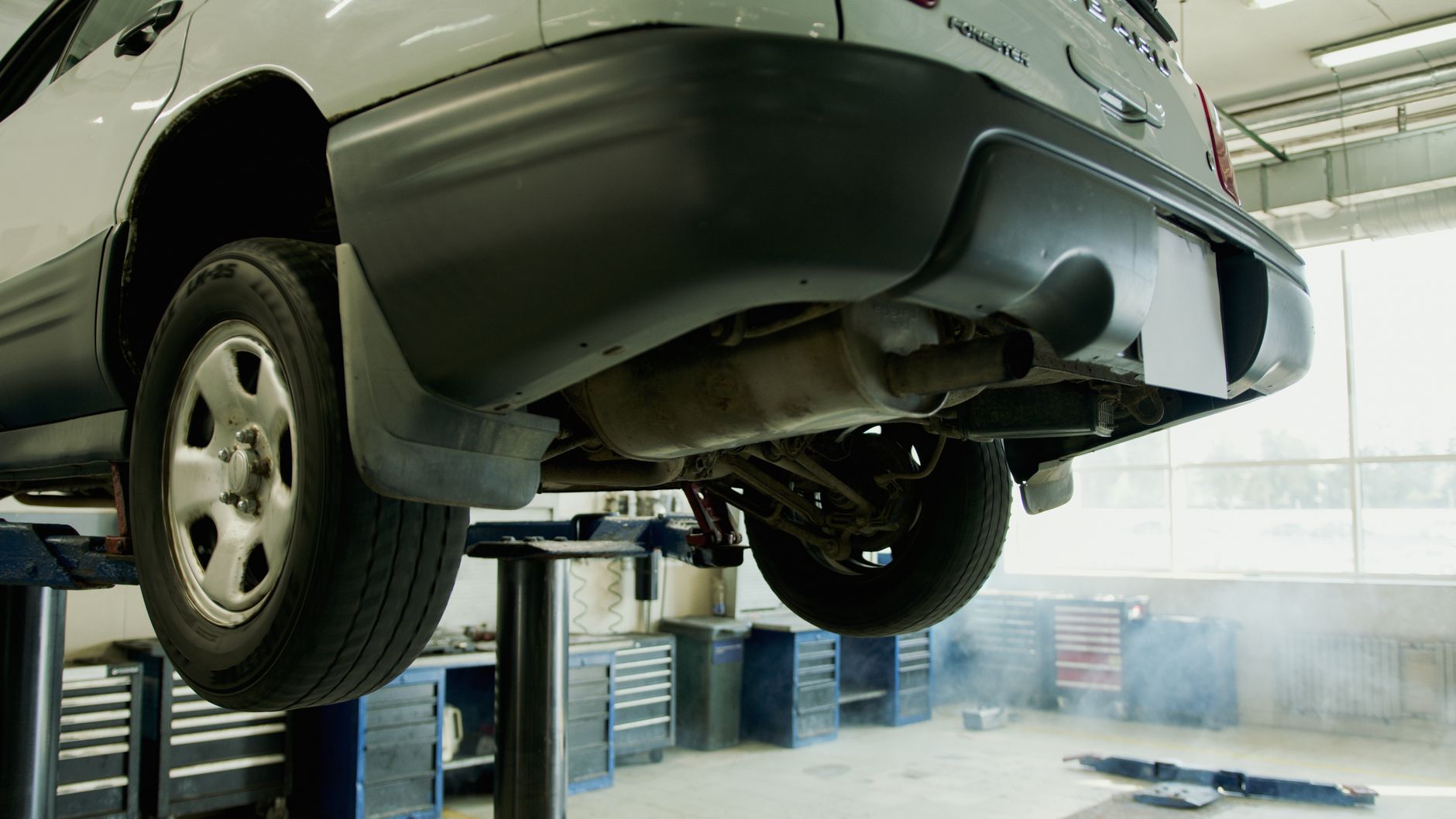
Quick answer: a transmission fluid leak usually shows up as a red or brown puddle around the middle of the car, according to AAA. The most common sources are the pan gasket, the cooler lines and the seals. On average a pan gasket replacement costs $519 to $668 and a cooler line $366 to $446, per RepairPal. Get it checked soon: a leak won’t fix itself.
Written by Mark Dannunzio, co-owner and ASE-certified lead technician at Shift Masters Transmissions in Phoenix. Leaks are one of the three problems Mark and Ken and their team see most, and the leak check is free.
(Kneels on the driveway. Stares at the stain. Sighs dramatically.) If you’re here, you probably found a mystery puddle under your car this morning. Our transmission problems guide introduced Gary, your transmission, and right now Gary may be crying red tears onto your concrete.
Or it may not be Gary at all. Cars have five fluids that love to leak, and it’s very easy to blame the wrong one, so let’s start with the lineup.
Is it really transmission fluid? The puddle lineup
Each row links to its source. Dab the puddle with a white paper towel to see the true colour.
Two traps to watch for: some coolants are dyed red too, and RepairPal notes that “some vehicles actually use automatic transmission fluid in their power steering systems.” (Gary and his neighbour share a wardrobe. It’s confusing for everyone.) Location is the tiebreaker: middle of the car points to the transmission, the front points to steering.
Where do transmission leaks come from?
According to NAPA, a transmission usually leaks “through its pan, fluid lines or broken seals.” (Three suspects. Gary’s a whodunit.) Monster Transmission, which sells transmissions, lists the common culprits in more detail:
Is it safe to drive with a transmission fluid leak?
Short trips to the shop, maybe. Ignoring it, no. Even Jiffy Lube says that while it may be safe to drive, “it’s not advisable,” and that “a transmission leak will not get better on its own.” (Sadly, Gary does not heal with rest and fluids. Well, half of that.)
The danger is what low fluid does next. Consumer Reports notes that “unlike engine oil, transmission fluid should never burn off,” so the level only goes one way, and AAA warns a leak left alone “can lead to catastrophic failure of the entire system.” Low fluid is also one of the top causes of a slipping transmission, which is the expensive sequel to this movie.
What does a transmission leak cost to fix?
It depends on where it’s leaking, and these are national averages from RepairPal, before tax and fees. (I promise the first one is the good news.)
Compare that with a rebuild, and the case for fixing a leak early makes itself; our transmission rebuild cost guide has those numbers if you need a fright.
Do stop-leak additives work?
The bottle makers certainly think so. Lucas says its Transmission Fix “completely eliminates most seal leaks,” while also saying it’s “Not recommended for CVT transmissions.” Bar’s Leaks says its own treatment works in automatic, manual, CVT and dual-clutch transmissions. (So the bottles disagree with each other. Gary finds this very relatable.)
What no bottle can do is replace a failed pan gasket, a cracked cooler line or a dented pan. Jalopnik suggests transmission additives only to “squeeze a few more shifts out of an already failing transmission.” If the leak is coming from a part, the part needs fixing.
Phoenix heat and transmission seals
Gaskets and seals are rubber, and rubber does not love a Phoenix summer. Parker, one of the biggest seal makers, says in its O-ring handbook that “prolonged exposure to excessive heat causes permanent hardening and usually destroys the usefulness of the seal.” (Basically, Gary’s seals get crispy.)
Parker is talking about seals in general, not your car specifically, so treat the Phoenix link as common sense rather than a lab result. Still, a hardened seal can’t hold fluid the way a soft one can, which is one more reason to get a fresh drip looked at sooner rather than later.
What we see in the shop
Leaks are one of the three problems we see most, along with slipping and harsh shifts. When they come in, the culprit is most often the pan gasket. (Gary’s weak spot is, apparently, his bottom.)
Every leak starts with a free check, so you know exactly where the fluid is coming from before anyone talks about price. Mark and Ken and their team have rebuilt thousands of transmissions, so if the leak turns out to be a symptom of something bigger, you’ll hear it straight, and any rebuild carries our 3 years or 36,000 miles warranty on parts and labor.
Transmission leak questions
What color is transmission fluid when it leaks?
Usually red or brown. AAA describes leaking transmission fluid as red or brown and thick, with a gas-like smell, and says transmission leaks usually show up around the middle of the car.
Is it safe to drive with a transmission fluid leak?
It's not advisable. A transmission leak will not get better on its own, and low fluid can lead to slipping, overheating and, eventually, transmission failure.
How much does it cost to fix a transmission leak?
It depends on where it's leaking. RepairPal puts a transmission pan gasket replacement at $519 to $668 on average and a cooler line replacement at $366 to $446. A leak inspection averages $61 to $90; ours is free.
Can a stop-leak additive fix a transmission leak?
Additive makers claim their products stop seal leaks, but they don't repair a failed gasket, line or damaged pan. Some, like Lucas Transmission Fix, are not recommended for CVTs.
Where do transmission leaks usually come from?
The most common sources are the pan gasket, the cooler lines and their fittings, and the shaft or axle seals. At our shop, the pan gasket is the one we see most.